

31 October 2026 / Morning edition
What agents can do—and who gets access
The take
The practical AI story is access, not just another model name. Research approval, subscription verification, tool permissions and metered web calls now shape what agents can actually do. Overnight coding fixes and dated creator releases make those operating boundaries worth checking before upgrading.
Coverage: 2026-10-30 17:35:00 UTC – 2026-10-31 05:35:00 UTC. Event dates and publication dates are distinguished below.
Inside this edition · 16 stories
- Cursor adds an earlier Claude Code version to its compromise warning
- Gemini CLI’s nightly respects more Git exclusions
- Opus 4.8 fast mode gets a shutdown date
- Claude Code adds shared budgets and closes permission gaps
- OpenCode adds interactive artifacts and more resilient long sessions
- Codex CLI keeps permissions intact when work resumes
- Mischief makes a five-second video for 2.5 cents
- Pika opens a reference-driven video-and-sound model
- Canva Brush edits the design, not just the picture
- KiCad patches crashes and network-drive saves
- Rosalind moves to GPT-6, behind a research-access gate
- Browser MCP reads more—and widens file access
- A short free trial for Ling's million-token model
- DeepSeek's agent web tools start charging today
- Replit turns a requested change into a reviewable PR
- Claude Ultra removes the five-hour cap—for verified accounts
SECURITY UPDATE • 30 OCT 18:30 UTC • INCIDENT 29 OCT
Cursor adds an earlier Claude Code version to its compromise warning
- Cursor’s updated notice now identifies malicious Windows and macOS packages for Anthropic.claude-code 2.1.312 as well as 2.1.313. The October 30, 11:30 a.m. Pacific update explicitly says indicators and affected versions were clarified—this is new information since yesterday’s edition, not a new attack.
- The exposure window remains October 29, approximately 09:27–20:35 UTC, through Cursor’s VS Code Extension Marketplace. Check historical installations and the platform-specific hashes in the updated notice, rather than assuming only version 2.1.313 mattered.
- Cursor says the attacker’s server is offline, but the payload could leave SSH keys and startup scripts behind. Follow the official inspection and remediation guidance; uninstalling or updating the extension alone may not remove persistence. Rotate accessible credentials from a trusted system if affected.
- The notice says these modified packages were not developed by Anthropic and does not establish compromise of the official distribution or all Claude Code installations.
31 OCT 01:19 UTC • PRERELEASE NIGHTLY
Gemini CLI’s nightly respects more Git exclusions
- The 0.67 development snapshot now honors .git/info/exclude and core.excludesFile in its shadow repository, resolves symlinked Glob paths canonically, and serializes concurrent installs of the same extension.
- It also preserves the selected model through temporary fallbacks, cancellation and rewind. This is a nightly reliability update, not stable Gemini CLI 0.67 or a universal data-exclusion guarantee.
30 OCT NOTICE • REMOVAL 30 NOV
Opus 4.8 fast mode gets a shutdown date
- Anthropic deprecated Claude Opus 4.8 fast mode on October 30 and will remove it November 30.
- After removal, claude-opus-4-8 requests with speed: "fast" will error rather than silently switch speed. The notice concerns fast mode, not retirement of the whole model.
- Anthropic recommends migrating fast-mode workloads to Claude Opus 5.5. Its fast pricing is $8 input/$40 output per million tokens, before cache/residency modifiers; dedicated rate limits still apply.
31 OCT 01:01 UTC • RELEASE 2.1.316
Claude Code adds shared budgets and closes permission gaps
- The Claude apps gateway gains a pooled monthly budget for a group, on top of each member’s limit, plus an optional layered policy mode that applies all matching policies rather than just the first.
- Fixes stop restricted sessions from uploading files outside working directories when a Read allow rule covered them, enforce gateway model restrictions across every named model, and stop shell commands being left running after certain exits. These are specific fixes, not evidence that every execution path is sandboxed.
- A new setting lets subagents use a default effort level independently of the main session. Bedrock gateway upstreams can tag prompts for the guardrail prompt-attack filter.
2.2.5: 30 OCT 23:17 UTC • 2.2.4: 16:59 UTC MISSED CATCH-UP
OpenCode adds interactive artifacts and more resilient long sessions
- OpenCode 2.2.4 adds opt-in HTML/static artifacts that agents can create, read, update and delete, using its built-in local provider or plugin storage. Desktop terminals now belong to the session, retain scrollback through server restarts and synchronize across windows and the TUI.
- Enabled experimental schedules now run under opencode serve, with multiple servers coordinated so a schedule fires once. Both artifacts and schedules require explicit experimental configuration; this is not automatic public hosting.
- The overnight 2.2.5 release lets compaction reserve a percentage of each model’s context window, such as 20%, instead of only a fixed token count. LiteLLM context-window errors trigger compaction rather than ending the session.
- It also fixes MCP disconnections on stdio messages larger than 10 MiB and reasoning-format errors after model switches or interrupted replies. These changes are distinct from yesterday’s 2.2.3 Claude login integration.
29 OCT 19:47 UTC • PREVIOUSLY MISSED • STABLE 0.166.0
Codex CLI keeps permissions intact when work resumes
- Codex CLI 0.166.0 preserves acknowledged approval and permission settings when threads resume or fork, and preserves reasoning-token accounting to avoid premature compaction.
- The release adds keyboard-driven transcript selection and search, codex queue --resume for unloaded threads, and codex doctor --network-only for focused connectivity and WebSocket checks.
- Terra appears in bundled, Vertex AI and Bedrock catalogs. This is a CLI integration update—not another model launch or proof of access on every account. Reconnection and app-server startup/shutdown races also receive fixes.
30 OCT 2026 • MISSED CATCH-UP • API RELEASE • EXACT HOUR UNVERIFIED
Mischief makes a five-second video for 2.5 cents

- TBC's mischief 1 is now available through fal and OpenRouter. Built on Wan 2.2, it turns an image into video; fal lists $0.005 per generated second at 480p and $0.01 at 720p—$0.025 or $0.05 for five seconds.
- The practical use is cheap draft generation: explore more shots before committing to a final render. TBC claims fivefold speed over its base model with matching quality, but these are vendor claims, not independent tests.
- 'Neuron-derived' does not mean your request runs on living brain cells: TBC says laboratory discoveries become proprietary software running on standard AI hardware. This is a commercial derivative of an existing model, not a new open-weight release.
29 OCT 2026 • MISSED CATCH-UP • OPEN WEIGHTS AND PAID API
Pika opens a reference-driven video-and-sound model
- Pika H3 Flex post-trains MiniMax H3 for six-step generation with synchronized sound and up to 12 image, video and audio references. Native output is 480p or 768p, 5–15 seconds at 24 fps; Pika's hosted finishing services add upscaling to 4K and separate audio stems.
- The API lists text/image generation from $0.01 per second and reference generation from $0.03 per second; audio-stem extraction is separately listed at $0.001 per second. Access is through Pika API Club now, while availability in the main creation product is planned for November 2.
- Downloaded weights follow the MiniMax H3 Community License, not an unrestricted open-source licence. The model card reports representative H100 80GB runs and about 210GB of base components; its seven-second speed claim measures transformer computation, not end-to-end API latency.
29 OCT 2026 • MISSED CATCH-UP • CANVA PRO ROLLOUT
Canva Brush edits the design, not just the picture
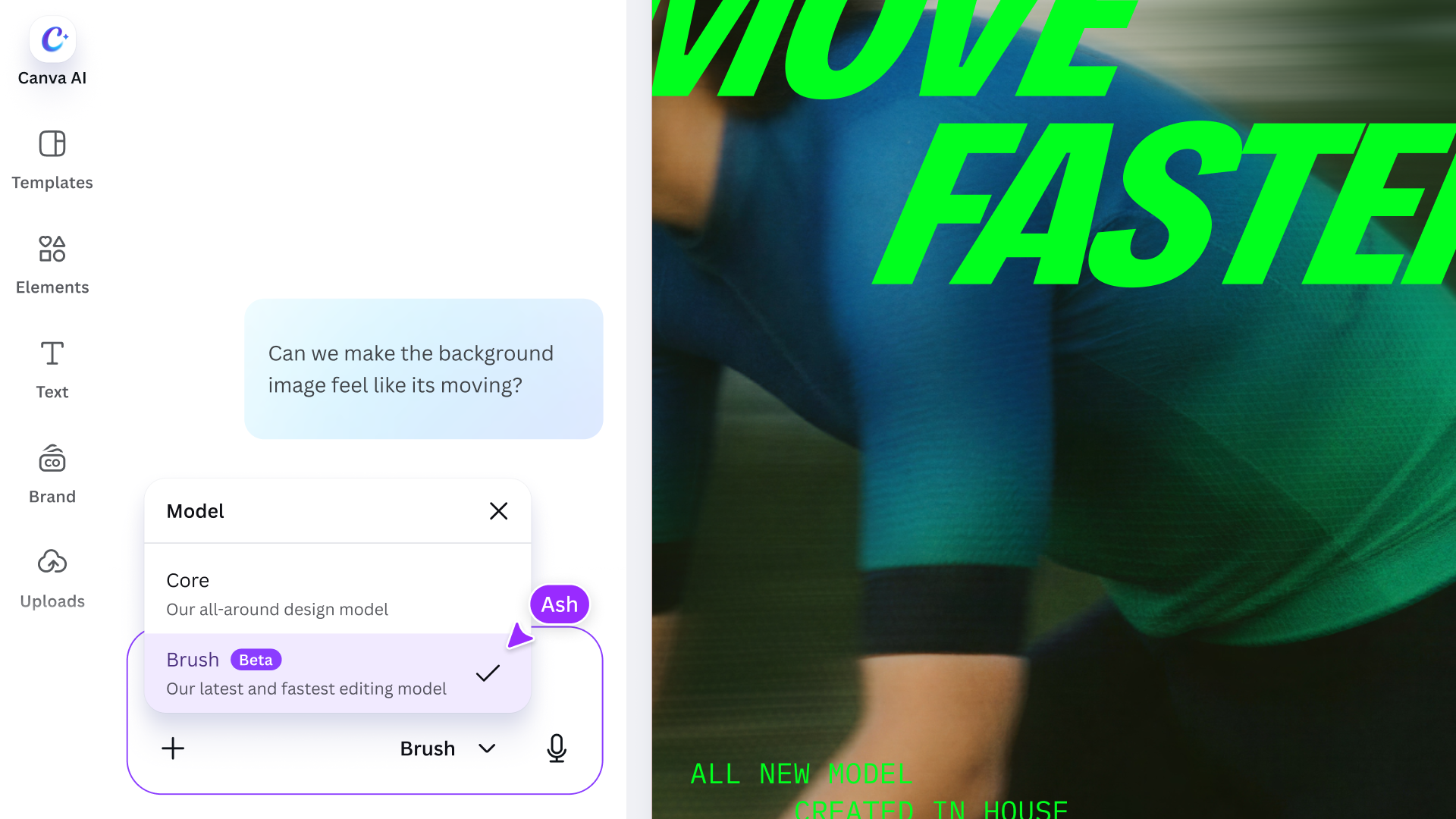
- Canva's new vision-language model changes editable design elements, including copy across a multi-page deck, restyling and adapting layouts for another channel. Open or link a design in Canva AI and select Brush from its dropdown.
- Supported edits are available to Canva Pro subscribers; wider access is promised. The announcement does not give a separate Brush price or quota. Its claim of 46% lower cost refers to Canva's cost per editing task, not a subscription discount.
- Brand Kit support, reference attachments and better image-heavy layouts are still being developed. Canva's speed and quality comparisons are internal tests; editable output still needs a person's review before publishing.
30 OCT 2026 • MISSED CATCH-UP • STABLE BUG-FIX RELEASE
KiCad patches crashes and network-drive saves
- KiCad 10.0.8 fixes several critical bugs in the free PCB-design suite. Notable repairs include saving to mapped Samba/SMB shares, crashes opening via-padstack boards and crashes when assigning duplicate netclass names.
- Maker workflows also gain corrected relative 3D-model paths, relative destinations in job sets and a fix preventing large boards from dropping to software rendering on AMD integrated GPUs.
- The project recommends upgrading soon; Windows, macOS and Linux packages are available or rolling out. This is maintenance, not a new KiCad major version or evidence of an actively exploited security vulnerability.
30 OCT • NEWLY VERIFIED • PUBLICATION HOUR UNKNOWN
Rosalind moves to GPT-6, behind a research-access gate
- GPT-6 Rosalind Research is rolling out to approved life-sciences research customers in Work, Codex and the API, not the Chat tab. The API identifier is gpt-6-rosalind.
- OpenAI's system card says it uses GPT-6 Astra's weights with no additional training data or post-training for this release. This is a specialized trusted-access deployment, not a newly trained base model.
- Research approval is required for both organization and users; Discovery approval does not qualify. Enterprise starts with a two-week Admin Preview, off by default, and GPT-5.5 Rosalind Research remains available.
- API pricing lists $15 input, $1.50 cached input and $75 output per million tokens. OpenAI retains biological/cyber safeguards and requires qualified human review before consequential research use.
30 OCT • DATE-ONLY RELEASES
Browser MCP reads more—and widens file access
- MCP server 2.3 adds --max all for page text and accessibility trees. Explicit reads can return 75,000 characters, a call 80,000; the default remains 10,000.
- The server update works with extension versions 2.0.x–2.2.x, so an extension update is not required for 2.3.
- Version 2.2 adds optional incognito access, disabled until the user enables it in Chrome. Agent-created tabs do not open in incognito.
- Also in 2.2, uploads and screenshot paths can reach outside MCP roots. The vendor warns that a malicious page could trick an agent into uploading any readable file; screenshot paths can overwrite existing files.
30 OCT • GATEWAY AVAILABILITY • TIME UNKNOWN
A short free trial for Ling's million-token model
- Vercel added InclusionAI's Ling 3.1 Flash 1019 to AI Gateway with a one-million-token context window, aimed at coding, multi-step reasoning and tool-using agents.
- Call inclusionai/ling-3.1-flash-1019 through the AI SDK or set it up in coding agents with the latest Vercel CLI's ai-gateway setup workflow.
- Requests cost nothing until November 3, 2026, but still appear in spend dashboards and request traces. Billing begins November 3 at the published rate.
- This is a gateway availability/promotion story, not evidence the underlying model first launched October 30. The announcement does not specify the promotion's cutoff hour or quotas.
UPDATES • TODAY 16:00 UTC • PREVIOUSLY ANNOUNCED DEADLINE
DeepSeek's agent web tools start charging today
- The October 17-announced free period ends today at 16:00 UTC (November 1, 00:00 Beijing). Search and Fetch through DeepSeek API in Harness, Claude Code and Codex each become $0.75 per 1,000 successful requests, on top of token charges.
- Only HTTP 200 calls with usable results are billed; failures, empty searches and timeouts are not. More search results do not change the per-request fee. Charging has not started at this edition's cutoff.
30 OCT WEEKLY CHANGELOG • TIME UNKNOWN
Replit turns a requested change into a reviewable PR
- Replit's Enterprise Cloud Agents contribution workflow finds relevant code, makes a requested change, tests it in the running app and opens a GitHub pull request or GitLab merge request with screenshots and video.
- Teams configure a shared development environment; changes run in isolated cloud sandboxes and follow team contribution guidelines. Engineers retain review and shipping control.
- Pro and Enterprise users can ask Agent to message another chat or create one. The release also adds GPT-6.1 Terra to Agent's Power Mode model selector.
- The changelog does not publish a separate price for the contribution workflow. These are Replit integrations and workflow changes, not a new Terra model launch.
30 OCT NAMING CHANGE • CURRENT PLAN TERMS VERIFIED • HOUR UNKNOWN
Claude Ultra removes the five-hour cap—for verified accounts
- Max 20x subscribers automatically move to the Ultra plan with no price change: $200 per month on the web. Ultra includes ten times Pro’s weekly usage, not unlimited usage.
- Verified Ultra accounts have no five-hour session cap. Verification is automatic using account and payment history; unverified accounts retain a temporary cap. Phone verification at checkout is separate and does not remove it.
- Weekly all-model limits and a separate Fable weekly limit remain. In Settings > Usage, absence of the Current session bar indicates verified status. Limits are shared across Claude product surfaces.
- The $100-per-month Max plan retains a five-hour limit and includes five times Pro’s allowance both per session and per week. Older 20x per-session branding and new 10x weekly wording are not directly comparable measures.
Coverage is drawn from public, accessible and indexed sources; it is not an exhaustive view of X and does not access a personal feed. Vendor claims, previews and access limits are identified in each story. This archive preserves the delivered edition; later developments may change availability, prices or incident status.