

1 November 2026 / Evening edition
More capable agents, more consequential permissions
The take
Agent capability is advancing faster than safe defaults. Today’s releases improve proactive bots and local inference; newly surfaced research stretches desktop automation further. The practical question is no longer only what an agent can do, but which permissions, migrations and usage limits come with it.
Coverage: 2026-11-01 05:30:00 UTC – 2026-11-01 17:30:00 UTC. Event dates and publication dates are distinguished below.
Inside this edition · 8 stories
- LobeHub makes proactive bots the default
- Interpreter keeps feedback compatible
- More local GPU paths, still prerelease
- Deepgram brings Daily and Pipecat into its voice stack
- DeepSeek publishes a repository-level agent prototype
- Microsoft releases a small agent that clicks or codes
- ChatGPT and Codex will share usage from December
- Krotos brings individual sounds into Studio
AGENTS / STABLE 2.3.0 / 1 NOV, 09:12 UTC
LobeHub makes proactive bots the default
- LobeHub 2.3.0 enables proactive participation for every bot. Owners can switch it off under a channel’s Wake policy. Wake records expose judged messages, decisions and reasons, with a 30-day summary: useful controls before letting bots join team discussions automatically.
- The release also adds real-time page collaboration and task-model selection. Self-hosters should read the upgrade notes: six automatic database migrations include transactional index creation that blocks writes to user_memories tables. For large tables, maintainers advise creating the same indexes concurrently before upgrading.
DEVELOPER BRIEF / 1 NOV, 11:40 UTC
Interpreter keeps feedback compatible
- Open Interpreter rust-v0.0.58 preserves legacy feedback delivery alongside optional signed attachment uploads. Its Codex compatibility text repeats the previous release; this is maintenance, not a new model capability.
UPDATE / LLAMA.CPP / 1 NOV, 06:19–09:00 UTC
More local GPU paths, still prerelease
- Builds b12027–b12032 extend this morning’s local-inference updates. Initial OpenCL IQ3_S and IQ3_XXS kernels include Adreno decoding optimizations; LFM3 gains tensor splitting.
- Other fixes cover InternVL token order, Hexagon v75+ DMA addressing for large strides, and SYCL library discovery. All these tags are prereleases. They are targeted compatibility changes, not evidence of a speed-up on every device.
MISSED CATCH-UP / ANNOUNCED 29 OCTOBER
Deepgram brings Daily and Pipecat into its voice stack
- Deepgram says it is acquiring Daily, maker of the Pipecat voice-agent framework. Daily says existing products will continue to be sold, supported and developed; Pipecat remains free and open source under its existing BSD licence. An independent foundation is being established, not presented here as already operational.
- The announcement also introduces the Real-Time Context Standard, carrying audio cues and response-delivery guidance between models. Its public demo uses RCS Alpha. This is a useful architecture direction, not evidence that every provider already supports it or a new November 1 acquisition.
MISSED CATCH-UP / CODE PUBLISHED 31 OCT, 12:05 UTC
DeepSeek publishes a repository-level agent prototype
- The MIT-licensed dsh-superagent bundle watches one GitHub repository and optionally Feishu. Authorized requests become separate worker sessions and directories, with results returned to the original discussion. A persistent router coordinates work rather than doing every task itself.
- DeepSeek explicitly calls this research code, not an official product or production-ready system. It differs from the internal design, with some described ideas not implemented. Worker commands run as the operator’s OS user without approval: separate directories are not a security sandbox. Review permissions and use an isolated test environment before connecting it to real repositories.
MISSED CATCH-UP / WEIGHTS PUBLISHED 30 OCT, 12:14 UTC
Microsoft releases a small agent that clicks or codes
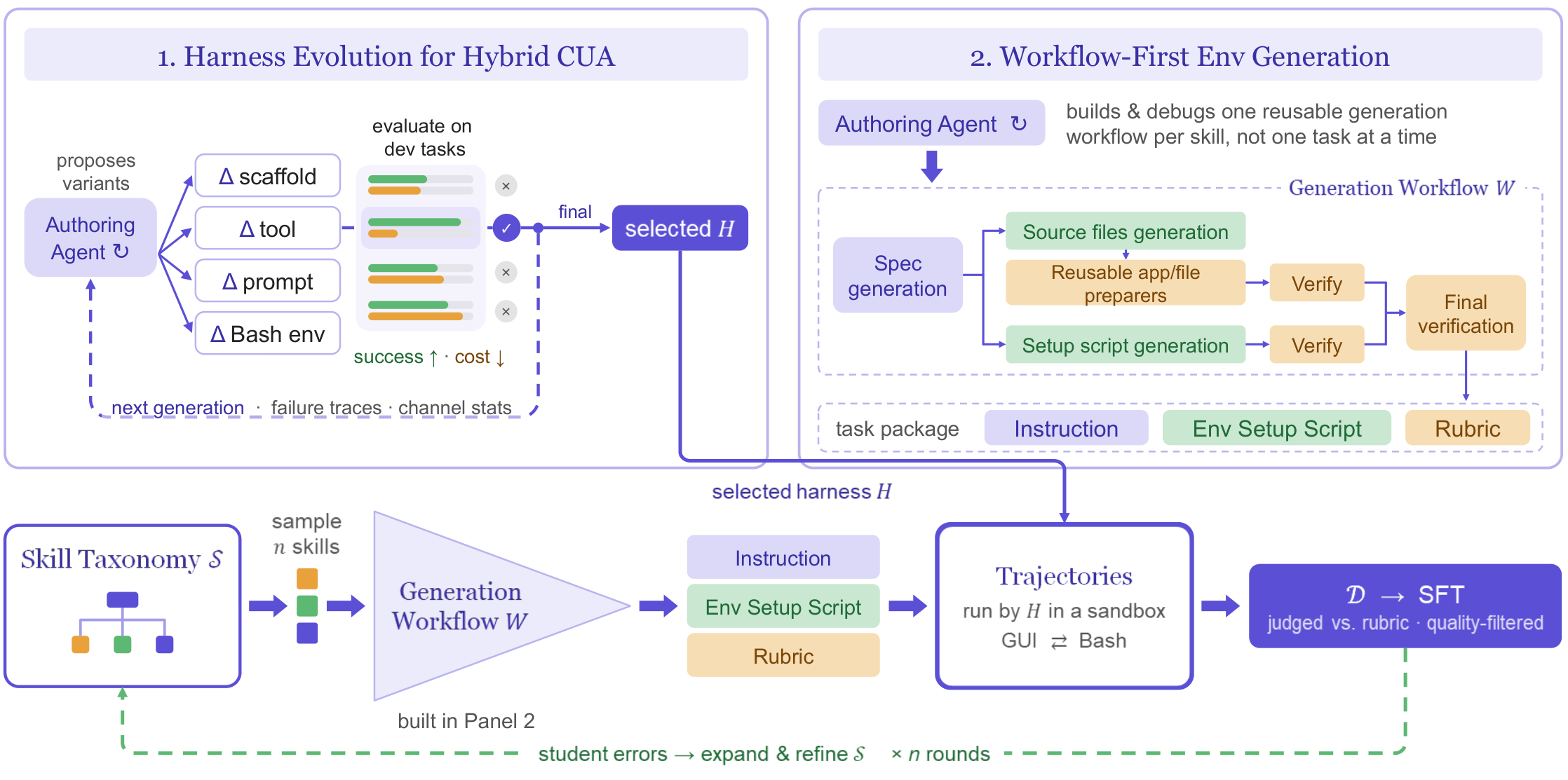
- Mage-VL-Cowork combines screenshot-based GUI actions and a persistent shell in one model. Microsoft describes it as 4B; its downloadable BF16 weights total about 9.48 GB. Apache-2.0 weights and evaluation code are available, but this is a research checkpoint, not a finished desktop assistant.
- Microsoft reports 66.0% on 361 OSWorld-Verified tasks, excluding Google Drive, under a 50-step budget. That is a vendor result, not our test. The model uses custom architecture code and Microsoft recommends isolated disposable environments. Download size is not a complete memory requirement; compute and execution safeguards remain the developer’s responsibility.
MISSED NOTICE / VERIFIED 1 NOV / EFFECTIVE DECEMBER
ChatGPT and Codex will share usage from December
- OpenAI’s Help Center says Plus, Pro and Business will share a token-based allowance across ChatGPT and Codex from December as Work’s agent capabilities move into the main experience. Instant chat will not consume it; model and task complexity affect usage.
- Exact start date and per-plan token allowances are not published. Combined usage and reset times will appear in Settings → Usage; reaching the limit allows waiting, upgrading or buying credits for eligible features. The page has a relative update stamp, not a stable publication date, and was already covered October 31: this is a missed notice, not a change taking effect today.
CREATOR CATCH-UP / ANNOUNCEMENT 29 OCTOBER
Krotos brings individual sounds into Studio
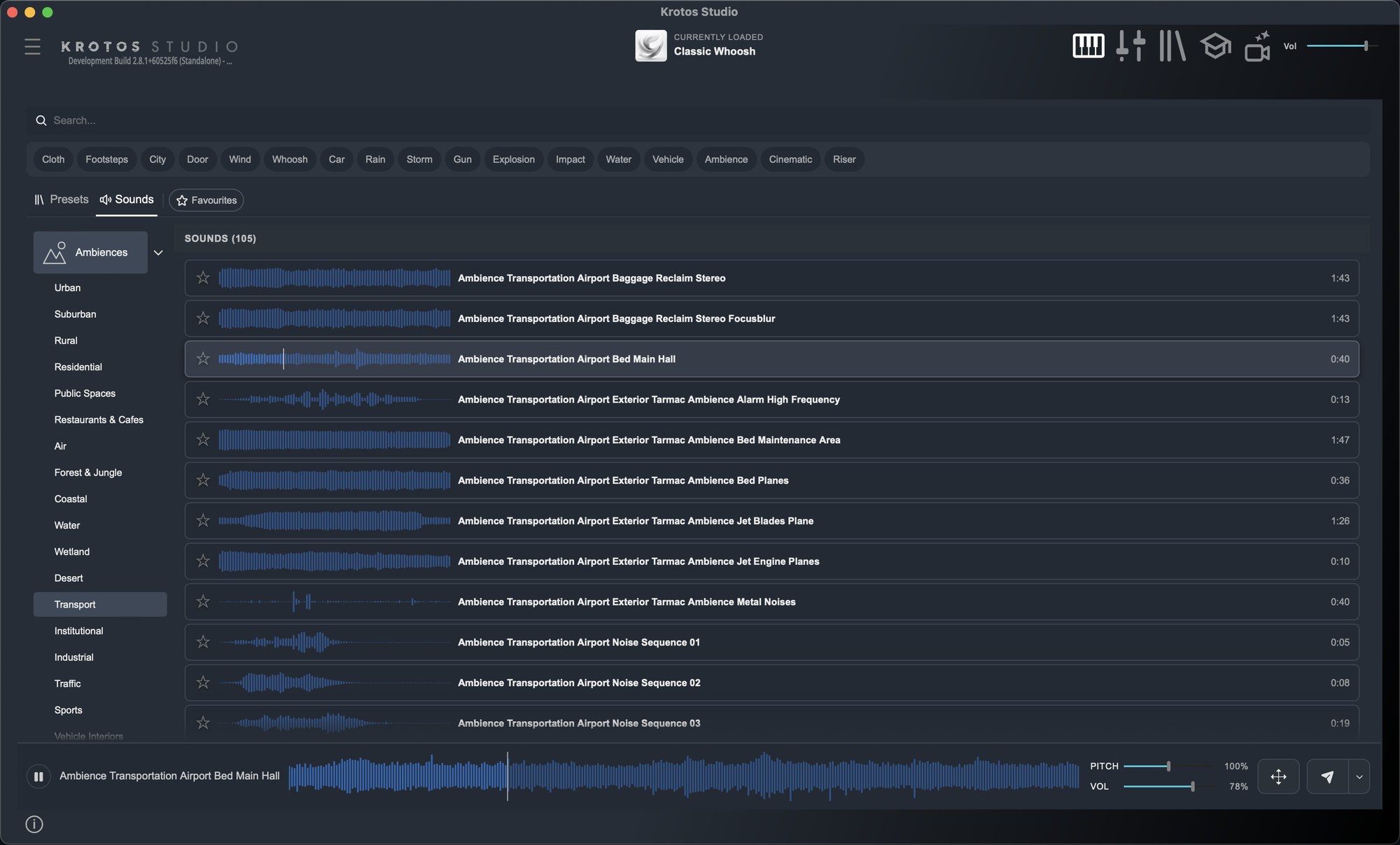
- Studio 3.0 adds searchable individual recordings alongside performable presets. Audition pitch and volume, then send a sound to the Pro Tools cursor or drag it into another editor. This shortens the route from browsing a library to placing a sound.
- The update is included for Studio, Pro and Max subscribers; accessible libraries differ by plan. Send to Pro Tools and the resizable interface are standalone-only. Importing your own sound library is not supported in 3.0. Krotos describes included sounds as royalty-free for commercial projects.
Coverage is drawn from public, accessible and indexed sources; it is not an exhaustive view of X and does not access a personal feed. Vendor claims, previews and access limits are identified in each story. This archive preserves the delivered edition; later developments may change availability, prices or incident status.