

3 November 2026 / Morning edition
Agents get safer defaults and stronger foundations
The take
Reliable agents need more than model intelligence. Overnight releases focus on fail-closed hooks, clearer approvals and better local serving. New audio and scientific tools widen the possibilities, but access gates and evaluation limits still determine what a small team can actually deploy.
Coverage: 2026-11-02 17:30:00 UTC – 2026-11-03 05:30:00 UTC. Event dates and publication dates are distinguished below.
Inside this edition · 16 stories
- SGLang pushes bigger models onto smaller hardware
- FastMCP repairs a routing edge case
- Ollama tests a sampler-default repair
- Agent hooks can fail closed, if you opt in
- Qwen makes approvals and failures easier to see
- AI SDK restores approval context
- Local voices without cloning
- OpenAI explains its Git backend for agent-scale coding
- Build, test and review in one session
- Claude keeps the conversation server-side
- GitHub moves its workflow block to 2 December
- Find gaps in repository protection
- MiniCPM-OCR aligns local results with its online API
- Hydrogen-1.0 opens a scientific post-training model
- Hume asks structured questions of raw audio
- LifeVal shifts evaluation toward everyday tasks
RELEASED / 2 NOV 22:14:10 UTC
SGLang pushes bigger models onto smaller hardware
- SGLang 0.5.23 adds model support including Muse Spark Open, Beam-1.0 and MiniMax-M3.1-Flash. Its opt-in Paged Experts path runs mixture-of-experts models larger than GPU memory on one consumer GPU. New plugins add Google TPU7x support and low-latency DeepSeek-V4.1-Flash decode on NVIDIA and AMD hardware.
- The project reports up to 30× faster performance than CPU offload for Paged Experts, and up to 44% faster single-user decode on GB300 or 75% on MI350X with the respective fused-kernel plugins. These are project-reported, workload-specific results, not general speed guarantees. Quantized FP8/NVFP4 MoE models also gain an opt-in LoRA engine.
- Source/package and platform-specific Docker images available. Hardware and model weights required. Stable GitHub release. Specialized modes require opt-in; no independent benchmark reproduction. See platform-specific image choices.
RELEASED / 3 NOV 02:52:59 UTC
FastMCP repairs a routing edge case
- FastMCP 4.1.6 preserves ClientGroup’s known tool routes after its group context exits. A previously resolved tool can therefore be called while only its own client remains connected. This narrow lifecycle fix helps multi-server clients avoid reconnecting an entire group for one known tool.
- Stable source/package release. Does not keep every client connected or grant new tool permissions.
PRERELEASE / 3 NOV 01:40:40 UTC
Ollama tests a sampler-default repair
- Ollama 0.40.14-rc0 stops its OpenAI-compatible path from overriding model sampler defaults and uses the model’s output limits when launching Claude Code. It also preserves readable Responses input, chunks long MLX top-k sorting, and repairs cloud-search response decoding.
- GitHub release candidate assets/source. Release candidate, not a stable recommendation. Test integrations before production rollout.
RELEASED / 3 NOV 01:25:46 UTC
Agent hooks can fail closed, if you opt in
- Claude Code 2.1.317 adds a hook-callback failure mode that blocks the requested action, a warning when scheduled tasks receive unrequested connectors, and a check before a web or shell call transmits the account email address. It also fixes local/project MCP servers disconnecting after the first turn in some Desktop sessions.
- Python Agent SDK 0.2.177 bundles this CLI and exposes on_failure="block" on HookMatcher. A raised exception, missing result or CLI-rejected return value then blocks the action. The default remains "continue", so upgrading alone does not make existing hooks fail closed; older incompatible CLIs raise CLIConnectionError when block is requested.
- CLI release and Python package available; normal account/provider requirements apply. Opt in to fail-closed behavior. Fixes do not establish a general security guarantee.
RELEASED / 2 NOV 18:22:40 UTC
Qwen makes approvals and failures easier to see
- Qwen Code 0.26.6 adds a Web Shell activity view for trusted-workspace sessions, with approval, input, error and completion states, plus per-request speed, first-token latency and failure details. Side-by-side session opening also gains a sidebar shortcut.
- MCP discovery now skips a duplicate tool name without hiding the server’s uniquely named tools. Approval text and edit paths escape control and bidirectional characters; OAuth refresh-lock cleanup checks ownership. The release also improves recovery reporting so missing child evidence does not become an invented completed step.
- Stable release with desktop installers, including new Fedora 44/RHEL 10 x64 RPMs. Some unified-agent-loop changes remain experimental. Release says no known breaking changes; provider/model charges are separate.
RELEASED / 3 NOV 01:20:31 UTC
AI SDK restores approval context
- AI SDK 7.0.162 restores server-defined tool metadata, dynamic status and title when validating tool-approval continuations, giving approval policies the same definition fields they see on fresh model calls. It also supports one telemetry operation spanning a durable WorkflowAgent run, including prompt, output, steps and tools.
- Full reconstructed OpenTelemetry traces require an explicit shared OpenTelemetryIdGenerator bridge across the tracer provider and durable integration. Without that wiring, live per-model tracing remains available. This is an integration and observability patch, not a new model.
- Published AI SDK package/source. Durable telemetry hooks are typed experimental APIs; explicit setup is required.
PRERELEASE / 2 NOV 23:17:24 UTC
Local voices without cloning
- llama.cpp build b12061 supports predefined voices in Kyutai’s PocketTTS weights without voice cloning. Applications select a voice through /tts or --tts-voice; the server lists voices in /props, rejects unknown names as bad requests, and defaults to the first available voice when none is given.
- Build b12060 adds GGUF conversion, loading and causal hybrid attention for autoregressive-only Clover MoE. Build b12059 improves unified KV handling for multiple sequences. These are runtime additions, not new model launches; all three GitHub builds are marked prerelease.
- Downloadable multi-platform binaries and source; separate compatible model weights required. Clover support is AR-only. Voice conversion can warn about mismatched states and skip incompatible ones; no measured output quality claim.
ENGINEERING CATCH-UP / PUBLISHED 2 NOV; TIME UNVERIFIED
OpenAI explains its Git backend for agent-scale coding
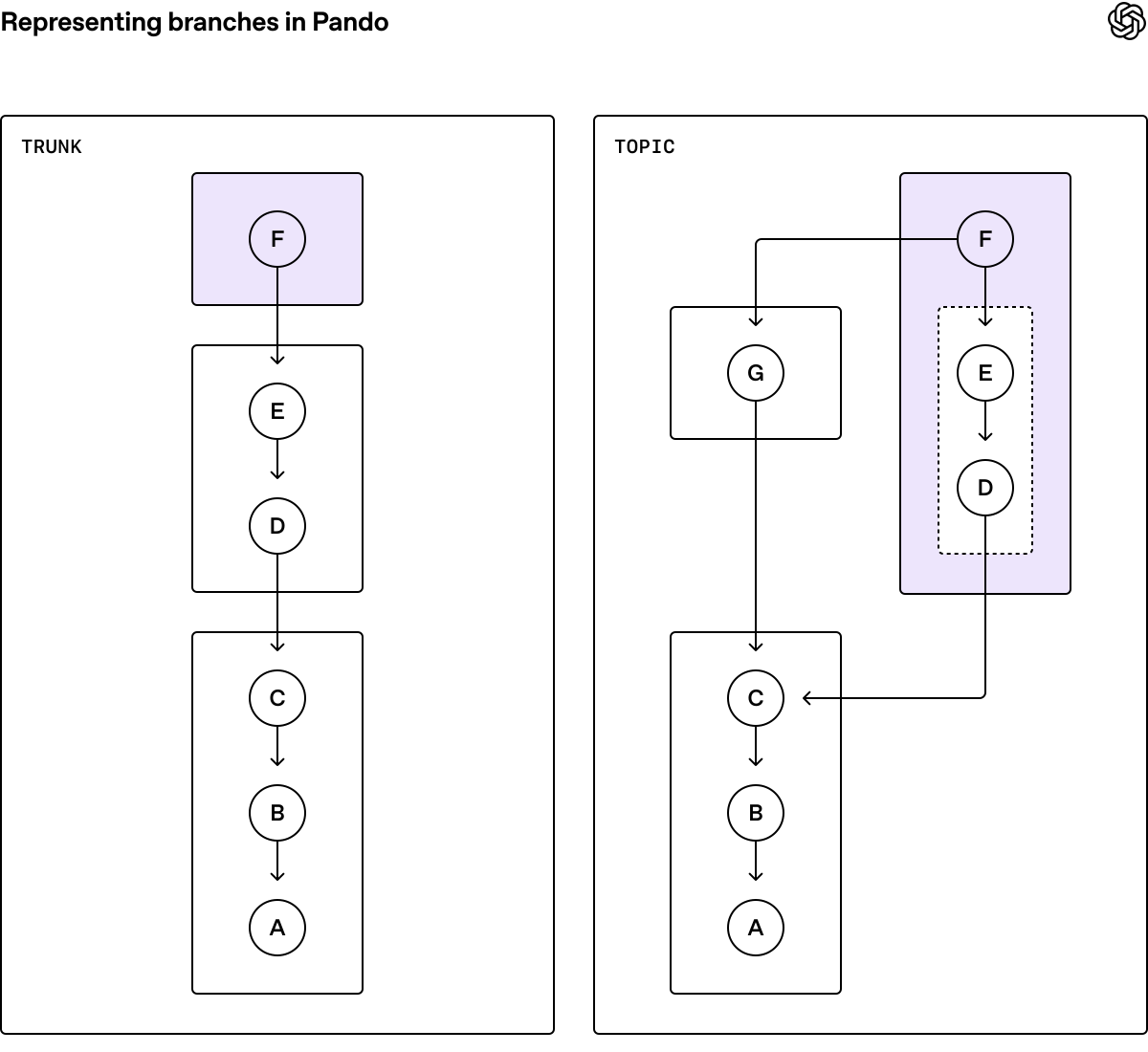
- OpenAI describes Pando, an internal Git-compatible backend built to absorb growing agent and developer traffic without replacing their Git workflows. It separates coordination from data delivery and reuses cached Git packs. OpenAI reports nearly 80% lower median push latency and capacity for a petabyte of Git data daily.
- The company says Pando reached production in April after ten weeks of development using Codex. This is an engineering disclosure, not a new public Git-hosting service. Some client fixes are upstream or in OpenAI’s public Git repository; sharing Pando itself remains exploratory. Performance figures are company-reported.
PRODUCT CATCH-UP / ANNOUNCED 2 NOV; TIME UNVERIFIED
Build, test and review in one session
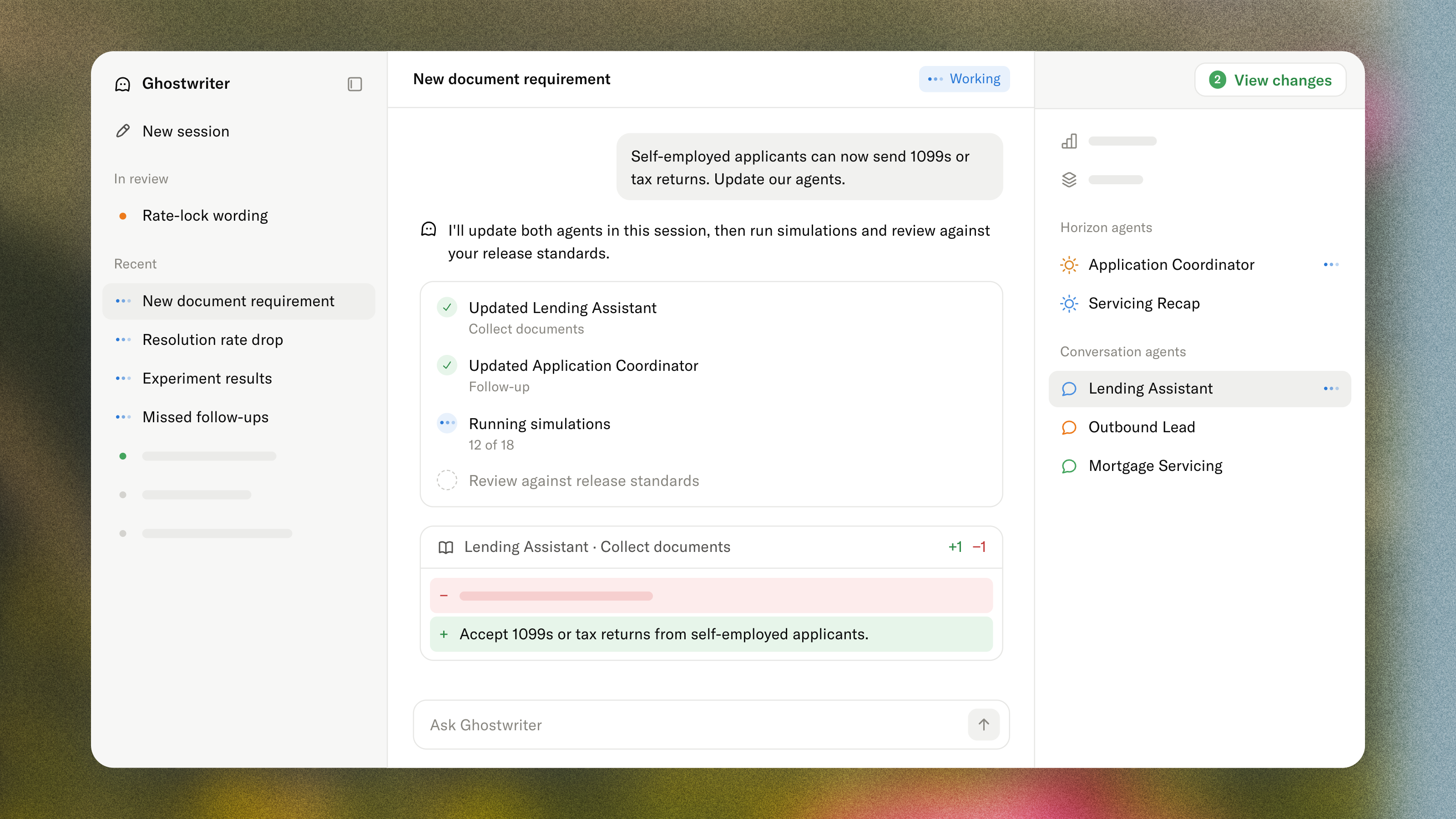
- Sierra has redesigned Agent Studio around Ghostwriter. Teams can investigate a performance problem, examine customer conversations, edit journeys and test the change within a single session. The session retains the discussion, proposed changes and evidence; related agents can share a project for coordinated testing and release.
- Sessions can be shared or forked, while edits wait for review and merging. Line-by-line comparisons, Preview Chat and Simulations support inspection; release governance adds required approvals and controlled rollouts. The announcement does not establish pricing or universal account availability.
API BETA / 2 NOV / DATED CATCH-UP
Claude keeps the conversation server-side
- Message threads let an agent send only new messages instead of resending its whole conversation. Anthropic says this reduces request size and time to first token; it is not a new model or a token-price cut.
- The beta covers every model on the Claude API, Claude Platform on AWS, Anthropic-managed Google Cloud and Microsoft Foundry. Pricing and rate limits are unchanged.
- A thread expires after five idle minutes. Contents are kept encrypted in memory and deleted within one hour of last use. There is no list/read/delete API; threads are not eligible for zero-data-retention or HIPAA use. Keep recoverable conversation state in your application.
SECURITY / 2 NOV NOTICE / EFFECTIVE 2 DEC
GitHub moves its workflow block to 2 December
- GitHub now schedules its default block on pull_request_target in public repositories for 2 December, rather than 2 November. Applicable Actions event policies can explicitly allow the trigger. Private and internal repositories are unaffected.
- Two brownouts, on 9 and 16 November from 16:00 to 18:00 UTC, will fail blocked attempts without executing the workflow. Outside those windows, evaluate mode warns which runs would be blocked.
- Audit workflows that run untrusted pull-request code with base-repository privileges. The delay is preparation time, not a reason to grant broad exemptions. This applies to GitHub Free, Team and Enterprise Cloud, not Enterprise Server.
GITHUB / 2 NOV / DATED CATCH-UP
Find gaps in repository protection
- Code and secret risk assessments now distinguish protected from unprotected repositories, making uncovered findings easier to prioritize. Organization admins and security managers can start under Security → Assessments.
- Available on GitHub Team and Enterprise Cloud. The secret-assessment improvement is planned for Enterprise Server 3.24. This reports coverage, rather than automatically fixing or enabling protections.
SDK RELEASE / 3 NOV 02:50 UTC
MiniCPM-OCR aligns local results with its online API
- MiniCPM-OCR SDK 1.0.4 exports page and document JSON aligned with the online parsing API, separates failed regions from deliberate skips, and adds GIF input. This is a software update, not a new OCR model.
- Adaptive rotation is now on by default; Quick Start downloads three Paddle orientation models. Without paddleocr it warns and skips rotation. Disable correction when reproducing OmniDocBench results, as the release recommends. A running recognition service is still required.
CATCH-UP / 2 NOV, ABOUT 13:35 UTC
Hydrogen-1.0 opens a scientific post-training model
- Deep Principle has post-trained GLM-5.3 on chemistry, materials and life-sciences data. Hydrogen-1.0 is a 753B-parameter open-weight model with MIT licensing, a stated one-million-token context and 128K output. Downloads require agreeing to share account details.
- BF16 and hardware-specific four-bit weights are linked; the model card describes eight-GPU serving with SGLang. This is not a laptop-scale model. API and hosted routes exist, but current prices were not verified. Training data and recipes are not fully open.
- Scientific benchmark results are developer-run, not independently reproduced. The experiment-planning comparison excludes two frontier models because they refused over half its requests. Treat it as a specialist research candidate requiring expert validation, not proof of safe autonomous laboratory work.
CATCH-UP / 2 NOV, ABOUT 16:00 UTC
Hume asks structured questions of raw audio
- Hume’s Audio Decision API takes audio plus questions and possible answers, returning probabilities instead of a transcript. Questions can use yes/no, choices, rating scales or event spans. Access is waitlisted; a playground is linked, but production pricing was not established.
- Published limits are MP3/WAV clips of 5 seconds to 5 minutes, 25MB combined request size and 60 requests per minute per organization. Live workflows send short files repeatedly; chunks are judged independently.
- Perceived vocal expression is not a direct measurement of someone’s internal emotional state. Hume’s evaluation is vendor-run. Use task-specific validation before making consequential decisions from audio labels.
DATED CATCH-UP / 2 NOV / SEE SOURCE DATE
LifeVal shifts evaluation toward everyday tasks
- OpenAI’s LifeVal evaluation focuses on everyday assistance: caregiving, education, household administration, shopping and other personal tasks. Task selection draws on two time-use studies and a survey of 3,995 people.
- The company says it has used the evaluation over the past year. This is a newly published evaluation account, not a new assistant launch. The accessible announcement did not establish a public reproducible task set or independent competitor comparison.
- Its example scores are developer-owned evaluation results, not guaranteed real-world success rates. They should not be directly compared with the differently constructed GDPx scores covered last edition.
Coverage is drawn from public, accessible and indexed sources; it is not an exhaustive view of X and does not access a personal feed. Vendor claims, previews and access limits are identified in each story. This archive preserves the delivered edition; later developments may change availability, prices or incident status.